What is Zettelkasten
There is no better way to explain this without taking it straight from the Zettelkasten website;
A Zettelkasten is a personal tool for thinking and writing.
It has hypertextual features to make a web of thoughts possible.
The difference to other systems is that you create a web of thoughts
instead of notes of arbitrary size and form, and emphasize connection,
not a collection.
I recommend this website for more context. This blog post is my advocacy for it — how it makes me learn and journal so effectively.
Why it works for note-taking
Taking notes is a skill. The act of writing something down and referencing it in the future is actually quite difficult — information is often discarded or becomes irrelevant.
Notes in isolation are small and to the point. Linking them to adjacent notes where applicable creates connections. One note can (or should) become a little hub of important information, resulting in a web of your own data.
My setup
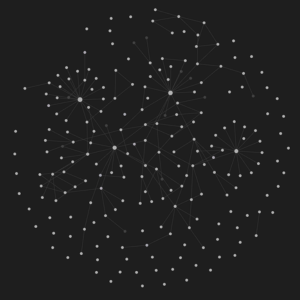
This is a graphical illustration of my notes, which I started this year. It's a graph view of my notes from the Obsidian GUI.
If you have read any of my posts, you will know I don't like GUIs, always preferring a text-editor approach. I have my mentor to thank for this recommendation.
Obsidian + Neovim
I use Obsidian through a Neovim extension, which lets me stay in my editor while I create notes.
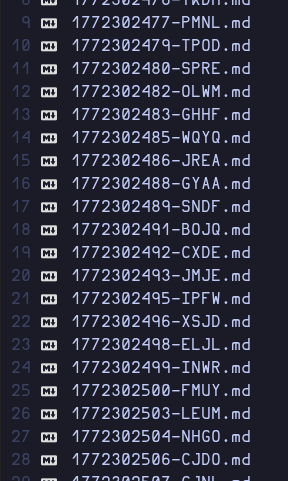
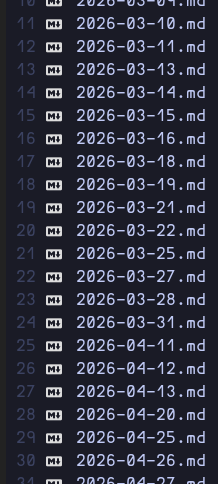
Every day I write down a to-do list(or try to). You know what's amazing about these?
They are just Markdown files.
I can plug opencode into this and if I'm really lazy, ask it about anything I've forgotten. In effect, I could use it to read my files and opencode could act like a second brain. ripgrep is just fine though.
How I structure notes
- Daily notes — timestamped entries as the entry point
- Concept notes — atomic ideas with unique IDs
- Maps of Content (MOCs) — hub notes that link to related concept notes
Tags and bidirectional links keep everything discoverable.
Challenges & adaptations
- Maintaining the habit of linking — easy to skip, hard to sustain. Daily notes can be just noise (see the Obsidian graph — the dots on the edges)
- Avoiding note hoarding — not every thought needs a permanent note
- Balancing structure with flexibility — too rigid and it breaks
- Depending on what you put in your notes and where, it could lead to a security risk
Final thoughts
Such a simple concept. I'm essentially creating notes and connecting them to other related notes.
But the result is a massive improvement in my learning and daily actions — whether it's studying, tracking my address history, or making sure I'm eating enough calories.